The Scoreazy learning toolbox

Do not just study harder. Choose a better way to learn.

Different learning problems require different responses. Scoreazy helps students understand what each technique does, when it is useful and how to apply it to their own subjects.

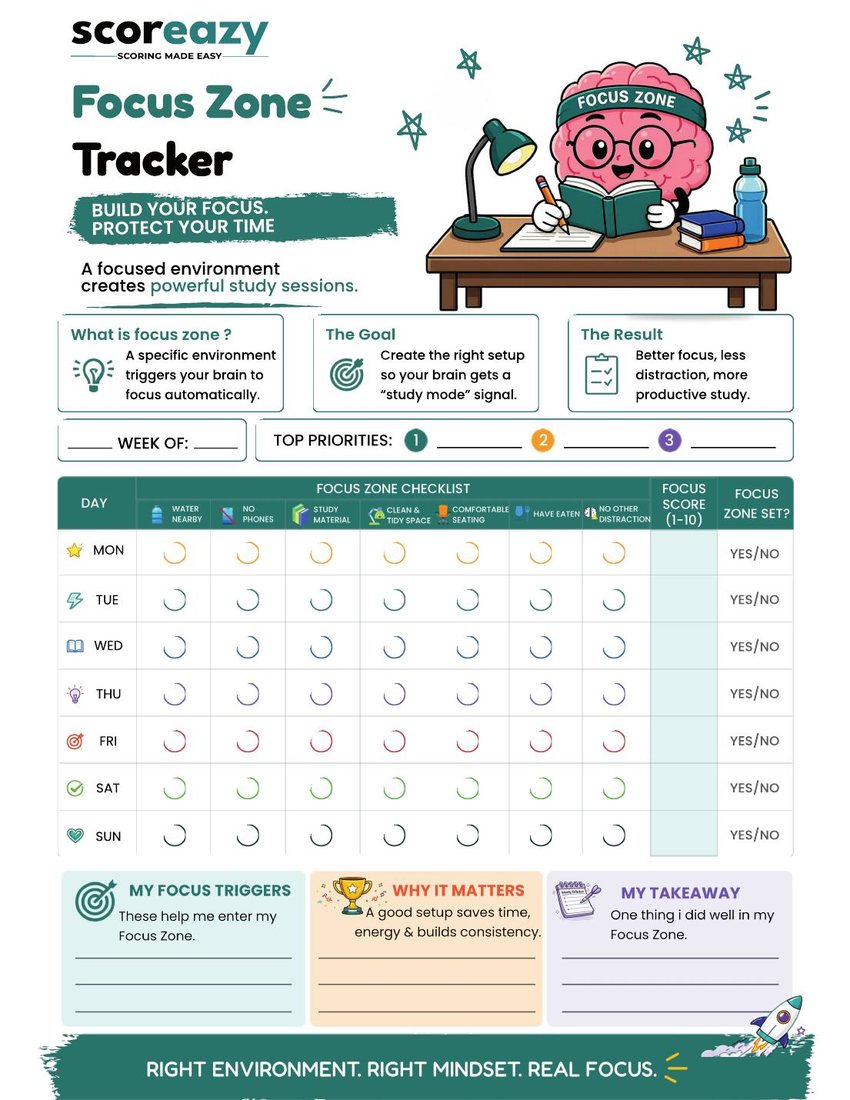
Scoreazy Focus Zone Tracker
Tools students can actually useFrom learning-science principles to everyday study practice.
Eight practical techniques

A tool becomes valuable when a student knows when to use it.

These techniques are grounded in learning science. Students practise them on real Physics, Chemistry, Mathematics, Biology and school work—with examples and guidance appropriate to their stage.

01 · Recall

Active Recall

What is it?
Bringing an idea to mind without looking at the answer first.
Use it when
Revising a completed chapter or checking what you genuinely remember.
Why it helps
Retrieval strengthens memory and reveals gaps that rereading can hide.
02 · Revision

Spaced Repetition

What is it?
Revisiting important learning across increasing intervals of time.
Use it when
A large syllabus must remain available for weeks or months.
Why it helps
Well-timed review reduces forgetting and last-minute cramming.
03 · Understanding

Feynman Technique

What is it?
Explaining a concept simply, as if teaching it to someone else.
Use it when
A topic feels familiar but becomes difficult in a new question.
Why it helps
Simple explanation exposes missing links and unclear reasoning.
04 · Reading

SQ3R

What is it?
Survey, Question, Read, Recite and Review—a purposeful reading sequence.
Use it when
Working through dense textbook chapters or theory-heavy subjects.
Why it helps
Questions and recall turn reading from recognition into active learning.
05 · Focus

Pomodoro

What is it?
Working in focused intervals separated by deliberate short breaks.
Use it when
Starting feels difficult or attention slips during long study sessions.
Why it helps
A defined interval reduces resistance and makes focus more manageable.
06 · Test analysis

Error Analysis

What is it?
Classifying why an error happened—not merely checking the right answer.
Use it when
Reviewing homework, practice questions, school tests or mock tests.
Why it helps
Students can address concept, process and execution errors differently.
07 · Planning

Study Planning

What is it?
Turning priorities, available time and subjects into a recoverable plan.
Use it when
Work feels overwhelming or a rigid timetable repeatedly collapses.
Why it helps
A realistic plan makes the next action visible and allows recovery.
08 · Practice

Retrieval Practice

What is it?
Practising the production and application of knowledge from memory.
Use it when
Preparing to answer independently under examination conditions.
Why it helps
Practice begins to resemble the mental work the test will require.
From idea to practice

Students work with guided modules and usable trackers.

The techniques are supported by structured learning material and practical tools that students can use during their everyday study.

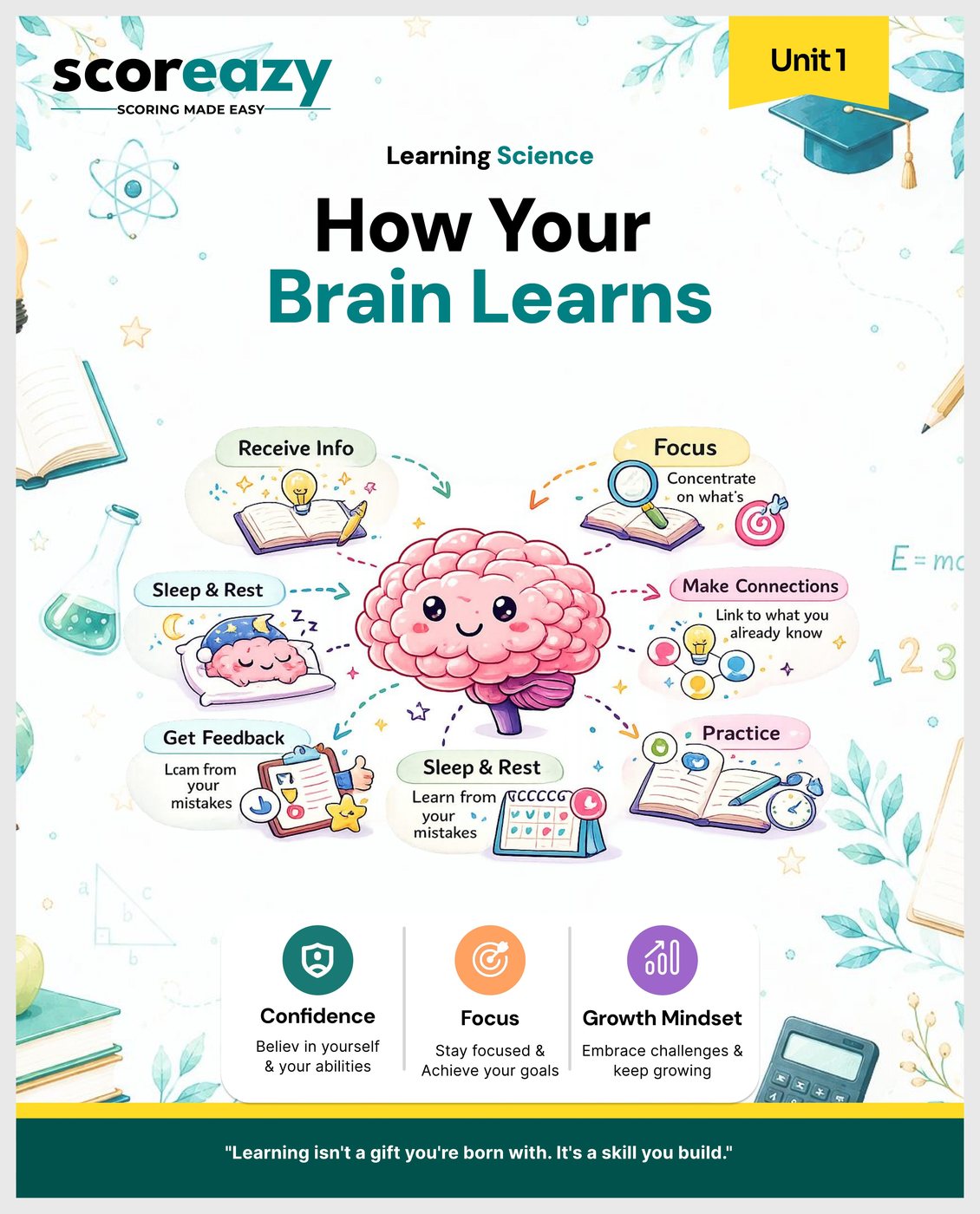
How Your Brain Learns foundation module cover
Learning Science foundationUnderstand how attention, connection, practice, feedback and rest support learning.
Scoreazy Focus Zone Tracker
Focus Zone TrackerTurn a focus concept into a repeatable study environment and weekly reflection.
Tools are not tricks

The goal is not to collect techniques. It is to build judgement.

Students learn to recognise the learning problem, choose a suitable tool, apply it to real academic work and track whether it helped. That is how a technique becomes part of an independent learning system.

01 · Discover

Notice the problem

Is the difficulty focus, understanding, recall, revision, planning or review?

02 · Choose

Select one tool

Match the technique to the task instead of using every tool everywhere.

03 · Apply

Use it on real work

Practise in the learner's own subjects, chapters and assessment context.

04 · Track

Learn from evidence

Notice what changed and adapt the next attempt with mentor guidance.

Experience learning science in action.

Begin with the free workshop, then build and apply the complete toolkit through the six-week guided cohort.

Explore the workshop and cohort →
WA